The difference
How this cabaret differs from a feathers-and-can-can revue
What sets the cabaret of dancers and light apart from the music-hall revue most visitors picture, from the sources: the room, the look, the light and where the can-can comes in.
Reserve your evening ↗Quick answer
A feathers-and-can-can revue is a multi-act music-hall spectacle; this cabaret is a show of choreographed tableaux in which light and projection serve as costume. Wikipedia defines a revue as a loosely themed show of music, dance and sketches and describes the cabaret's shows as highly aesthetic and refined. The cabaret, opened in 1951, sits in former wine cellars, and its own FAQ calls the room intimate. Neither is better. They offer different pleasures, and knowing which you want saves a disappointing evening.
Two traditions
Paris has two overlapping cabaret traditions. English Wikipedia's article on cabaret traces music halls arriving from London in 1862, offering lavish productions with dancing, and says the can-can took its modern form in a Montmartre cabaret that opened in 1889. The same article says the cabaret on Avenue George V, which opened in 1951, featured striptease. So one tradition is a spectacle of dance and costume, and the other is a house built on the female form and on light. They are related but not the same, and which one you want shapes which ticket to book.
What a revue is
Wikipedia defines a revue as a popular theatre show with several acts, mixing music, dance and sketches, which has no overarching storyline and is held together only by a loose theme. It says revues drew on minstrelsy, literary travesties, theatrical extravaganzas and burlesque, and that contemporary revues survive in traditional variety theatres in cities including Paris and Berlin. That variety is the revue's pleasure: many kinds of act, many costumes, a big room.
What this cabaret does instead
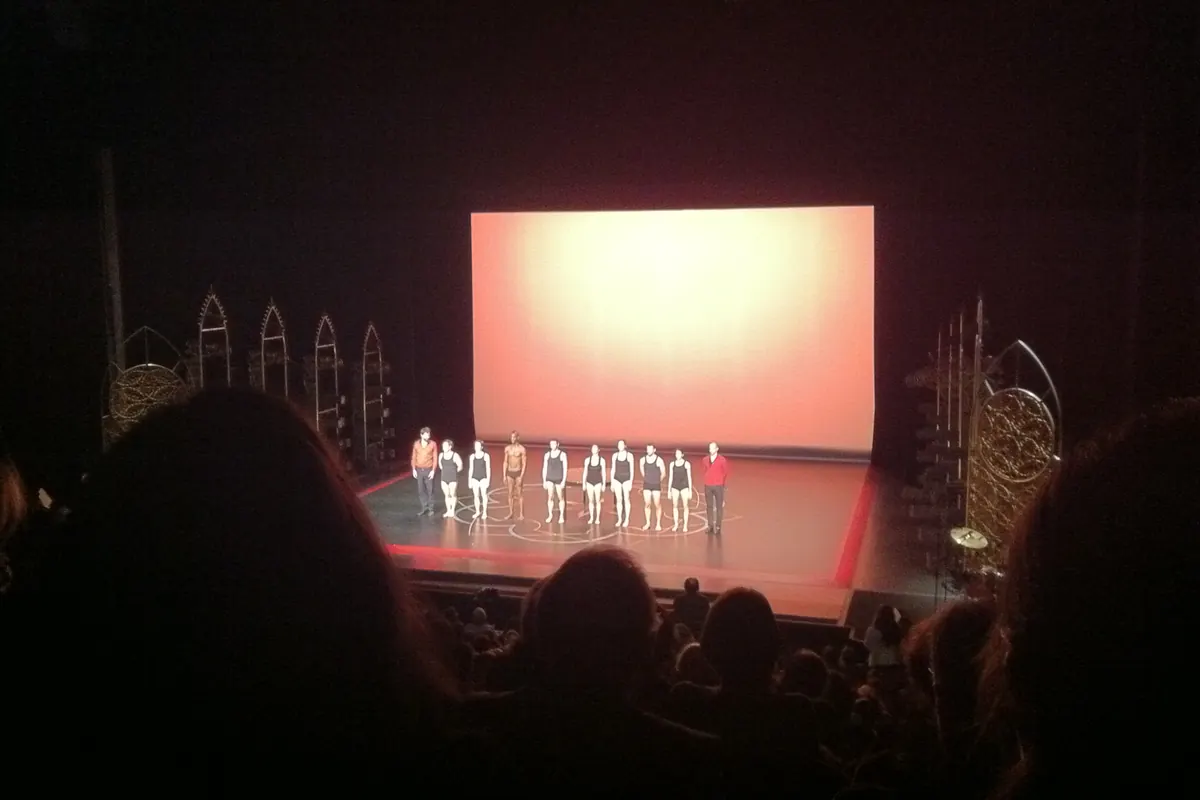
The cabaret says its performers are dressed primarily in lights, with each act staged as a tableau that can include projections. Wikipedia describes the staging as highly aesthetic and refined, with female dancers in kaleidoscopic plays of light. The room, in former wine cellars, is described as intimate in the cabaret's FAQ. The pleasure here is focus rather than variety: one subject, one look, and a lot of control over what the eye sees.
The look, the names and the guests
Come to Paris describes the dancers' signature look as a square-cut wig with a fringe, red lips and high heels. The cabaret's dancers page says each dancer receives a stage name when she debuts. Guest creators have joined the house since 2006, among them a choreographer, a fashion designer and a burlesque star, according to Wikipedia and Come to Paris. Those are guest tableaux in a house style rather than a change of format.
Where the can-can fits
It does not, as a rule. The can-can belongs to the music-hall tradition, and Wikipedia credits its modern form to a Montmartre cabaret of 1889. If feathers, sequins and a can-can are what you came for, look for a revue. If the point is a show you can describe as dance and light, this is the house.
Which evening to book
Book the light cabaret if you want an adults' show with a single strong look, and read the age rule and the dress code first. Book a revue if you want scale, variety and the can-can. Either way, check that the option you choose matches the length of evening you want, and read what it includes.
Sources